Buyer's overview
DJ slipmats: 1 devices at a glance
The slipmat is the cheapest part of a vinyl setup and the first one that turns out to be missing. It sits between the platter and the record and lets the platter keep turning while the record stays still — the precondition for cueing and scratching. The mat that came with the turntable usually cannot do that: it is built to hold the record in place. And as with cartridges: two decks means two mats.
up to €100
Ortofon
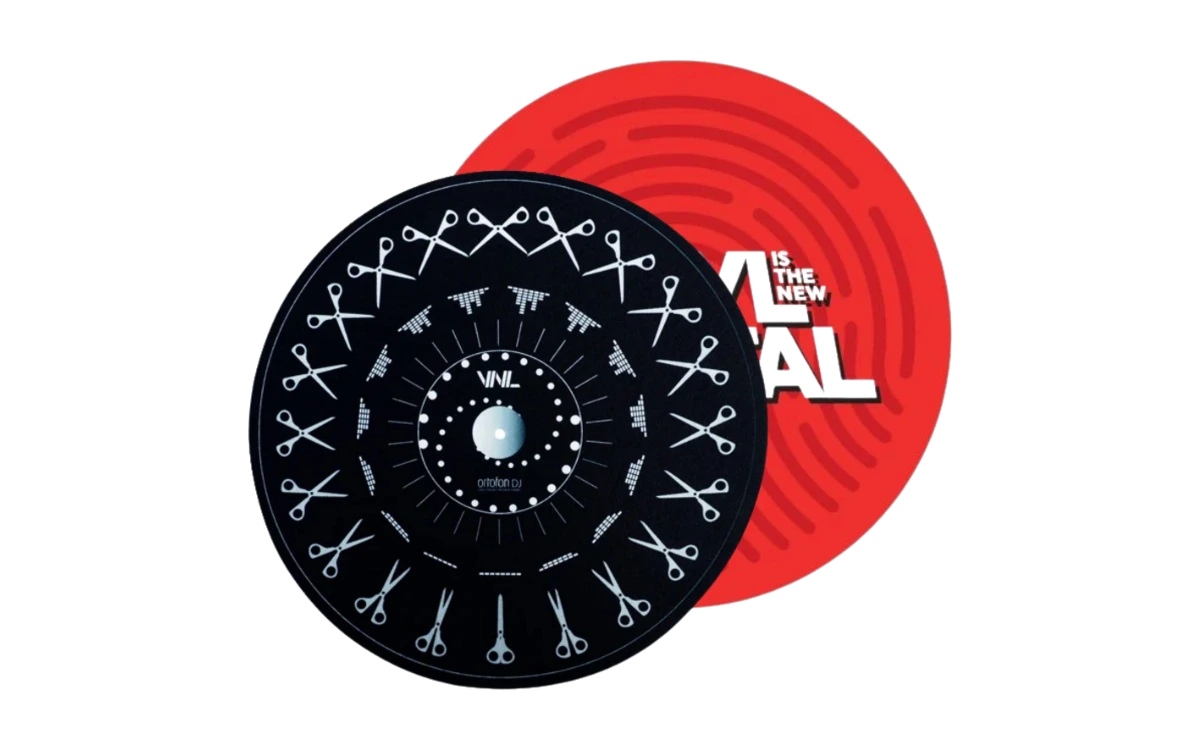
Slipmat (12 Zoll)
A 12-inch slipmat from Ortofon's own range — six versions that differ only in the print.
- 12 inches — the standard size for DJ platters
- Six designs at the same price: VNL, Mix, Scratch, Digital, Club, DJ
- Two decks means two slipmats
Frequently asked questions
The questions people actually ask before buying — answered from what we can back up. Daily prices are deliberately not part of it.
- What are slipmats for?
- A slipmat sits between the platter and the record. It lets you hold the record still or pull it back while the platter keeps turning. That is what makes cueing and scratching possible — without one, the platter drags the record along the moment you touch it.
- Is the mat that came with the turntable good enough?
- For listening yes, for DJing usually not. Bundled rubber or felt mats are made to HOLD the record in place — which is what you want when listening and exactly wrong when DJing. If the record barely moves against the platter, the original mat is probably still on there.
- How do slipmats differ from each other?
- In material, thickness and surface — and therefore in how easily the record slips. Thinner and smoother means more slip, thicker and rougher means more control. Which suits you depends on what you play; the print on top changes nothing about the feel.
- How many slipmats do I need?
- One per turntable, so two for a pair of decks. They are a wear part: felt clogs up over time and slips less well. Since they are among the cheapest parts of a setup, replacing them beats getting used to a tired mat.
Other categories
Everything together, filterable by setup and budget, is in the catalogue. Why we recommend what we recommend is in the buying guide. To the equipment catalogueTo the buying guide
You picked your gear — now what?
The learning path takes you from the first cable to your first set: 12 phases, step by step, free. It works with any device — including the one you already own.