
Buying advice 2026
DJ controllers for beginners:
the honest comparison.
We don't sell controllers. Where a device is marked “Ad”, we earn a commission if you buy through it — but the choice is made beforehand, without looking at that. So what's written here is what actually counts: which device suits which goal, and where you can save your money.
In short
For beginners, a 2-deck controller between €100 and €300 is enough. The best all-round choice is the Pioneer DDJ-FLX4 (approx. €300, runs with Rekordbox and Serato). Just to try things out, the Pioneer DDJ-200 (approx. €150) or the Hercules Inpulse 200 MK2 (approx. €100) will do. Spending more than €300 only pays off once you're playing out regularly.
What really matters with your first controller
Spec sheets confuse more than they help. These four points decide it:
The 5 best entry-level controllers compared
Pioneer DJ DDJ-200 (discontinued)
Strengths:Light, cheap, an enormous choice of tutorials, a way into Rekordbox — the classic for learning.
Weaknesses:No audio interface for speakers (output only via a splitter or the laptop), plasticky feel.
Who it's for:Absolute beginners who first want to find out whether DJing is their thing.
Pioneer DJ DDJ-FLX4
Strengths:A full audio interface, works with Rekordbox AND Serato, a club-like layout — it stays useful for years.
Weaknesses:Twice the price of the DDJ-200; overkill if you only want to try DJing out.
Who it's for:Anyone who is serious and wants to work with one device for 1–3 years. Our recommendation.
Hercules DJControl Inpulse 200 MK2
Strengths:The cheapest entry that still makes sense, built-in learning aids (beatmatch guide LEDs), an audio output is there.
Weaknesses:Small jogwheels, few pads — you outgrow it quickly.
Who it's for:A tight budget, or a present for a teenager.
Hercules DJControl Inpulse 300 MK2
Strengths:Bigger jogwheels and 8 pads per deck, good learning features, fair value for money.
Weaknesses:A weaker software bundle than Pioneer's; clubs mostly have a Pioneer layout.
Who it's for:Price-conscious beginners who want more than the minimum.
Numark Mixtrack Platinum FX
Strengths:Large jogwheels with a display in the wheel, 6 FX paddles, a full-length pitch fader — a lot of hardware for the money.
Weaknesses:Serato Pro costs extra; the build quality is below Pioneer's.
Who it's for:Serato fans, and anyone who wants big jogwheels for learning to scratch.
A clear recommendation by budget
What else you need (headphones, speakers, cables) and what you can save your money on is in the complete equipment guide →
One pick per budget
DJ controllers: our pick per price class
Every controller in our register side by side, from the entry class to standalone units.
Chosen by the same rules as the setup finder: in each price class “Recommended” first, then “Step up”, then “Entry level”. Whether and where we earn from a purchase has no say in the ranking. And every card also says what speaks against the unit.
- up to €100Entry level
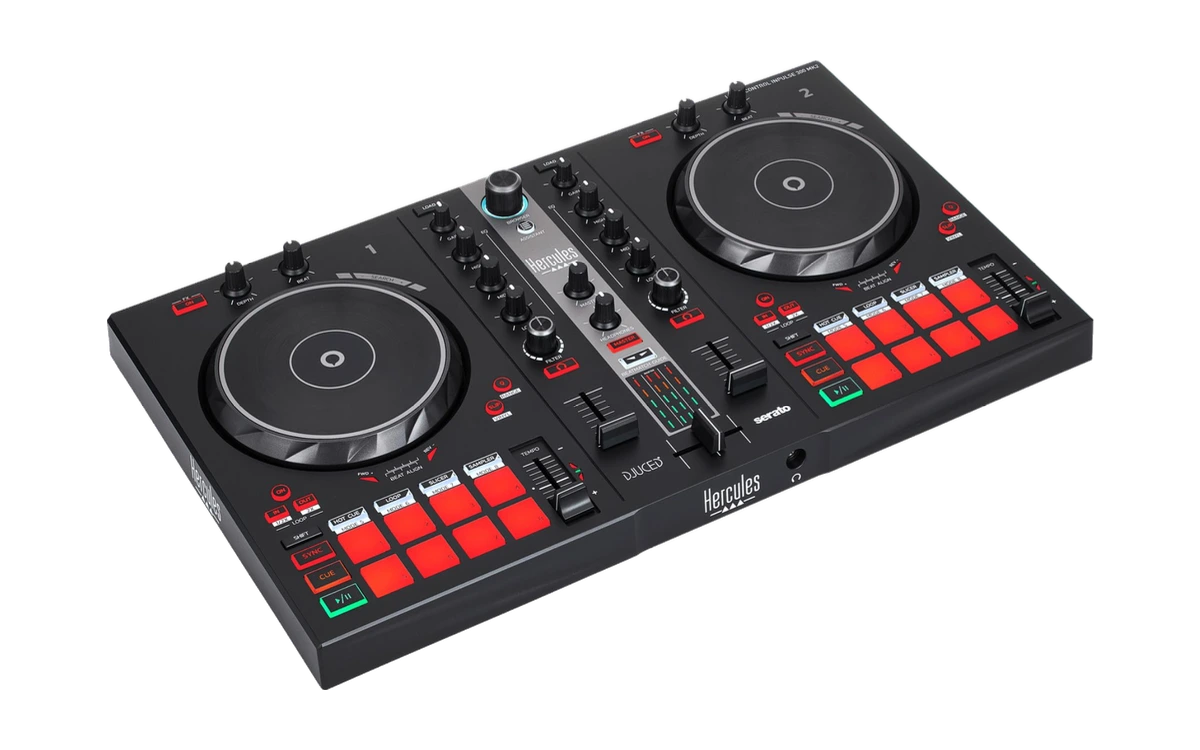
Hercules
DJControl Inpulse 200 MK2
Who it is for: Anyone who does not yet know whether DJing is for them and wants to spend little.
- In its favour: The lowest price class in the catalogue
- Against it: Simpler build quality
- €100 to €200Recommended
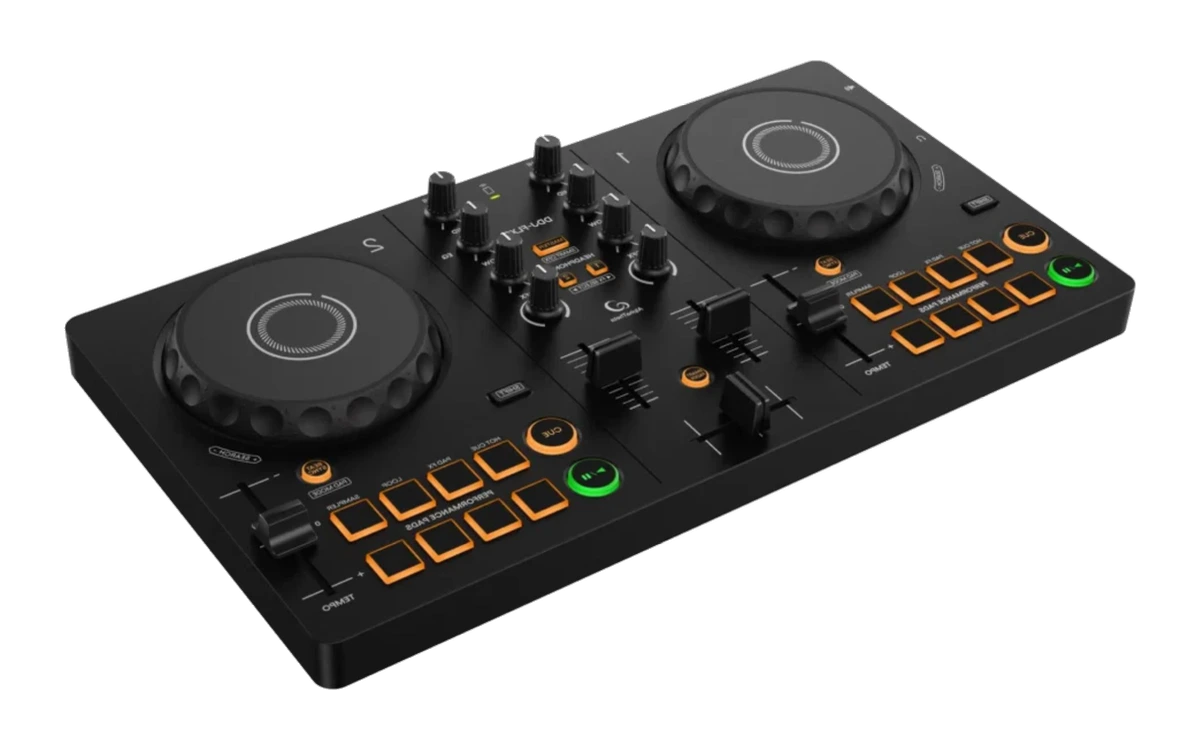
AlphaTheta
DDJ-FLX2
Who it is for: Most beginners: rekordbox-compatible, with a built-in sound card, and every lesson here shows it.
- In its favour: Built-in sound card
- Against it: Two channels, no club layout
- €200 to €350Recommended
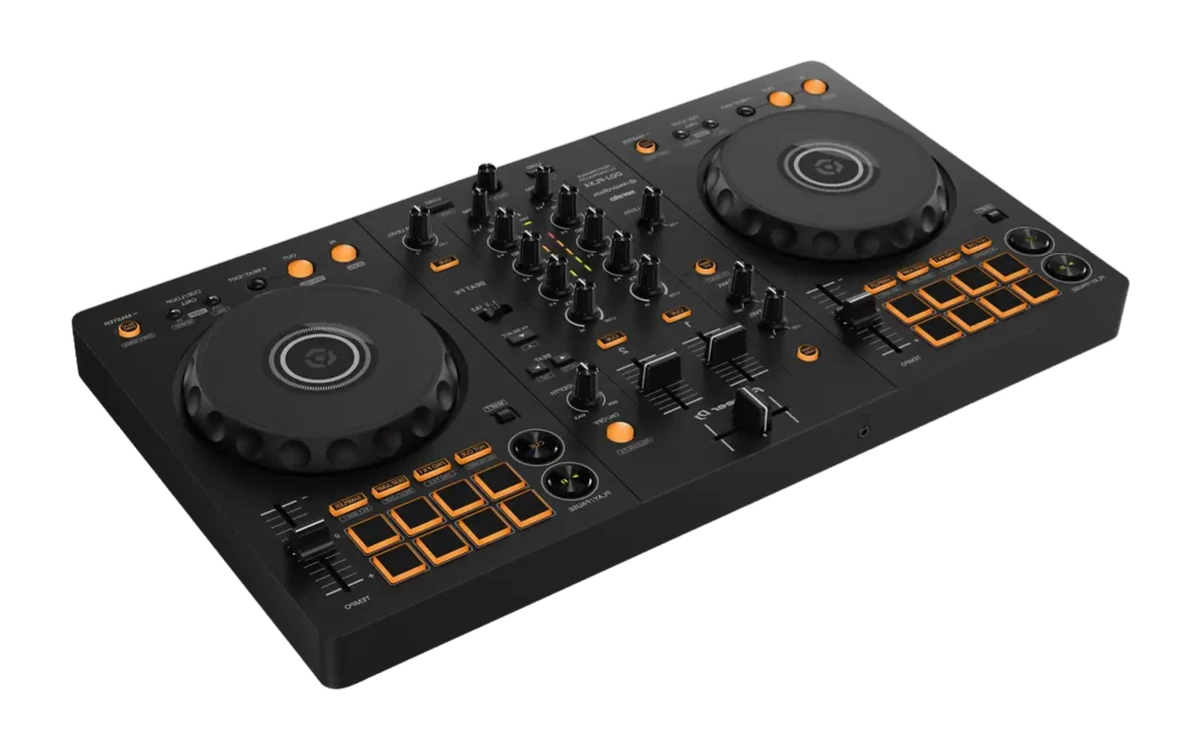
Pioneer DJ
DDJ-FLX4
Who it is for: Anyone who wants a layout that matches the club setup from day one.
- In its favour: Club layout, moving to CDJs is easier
- Against it: More expensive than the FLX2
- €350 to €600Step up
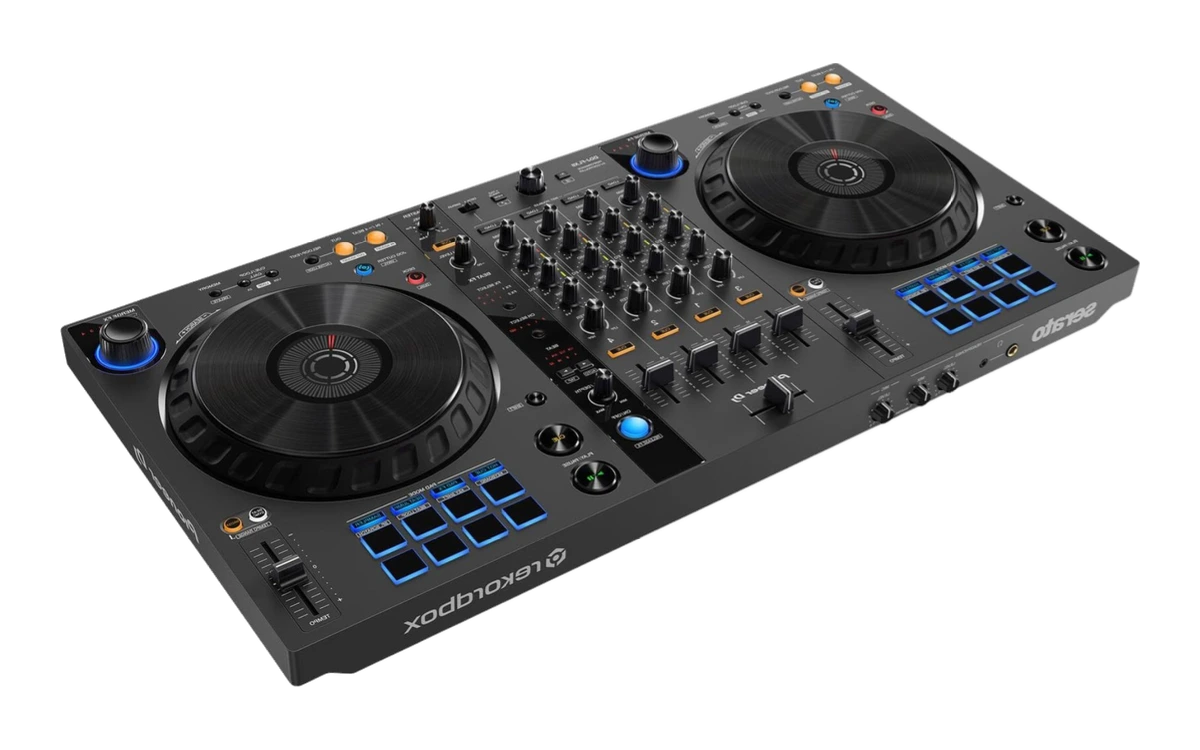
Pioneer DJ
DDJ-FLX6-GT
Who it is for: Anyone already mixing who wants more channels, effects and a bigger device.
- In its favour: Four channels
- Against it: Big and heavy
- over €600Step up
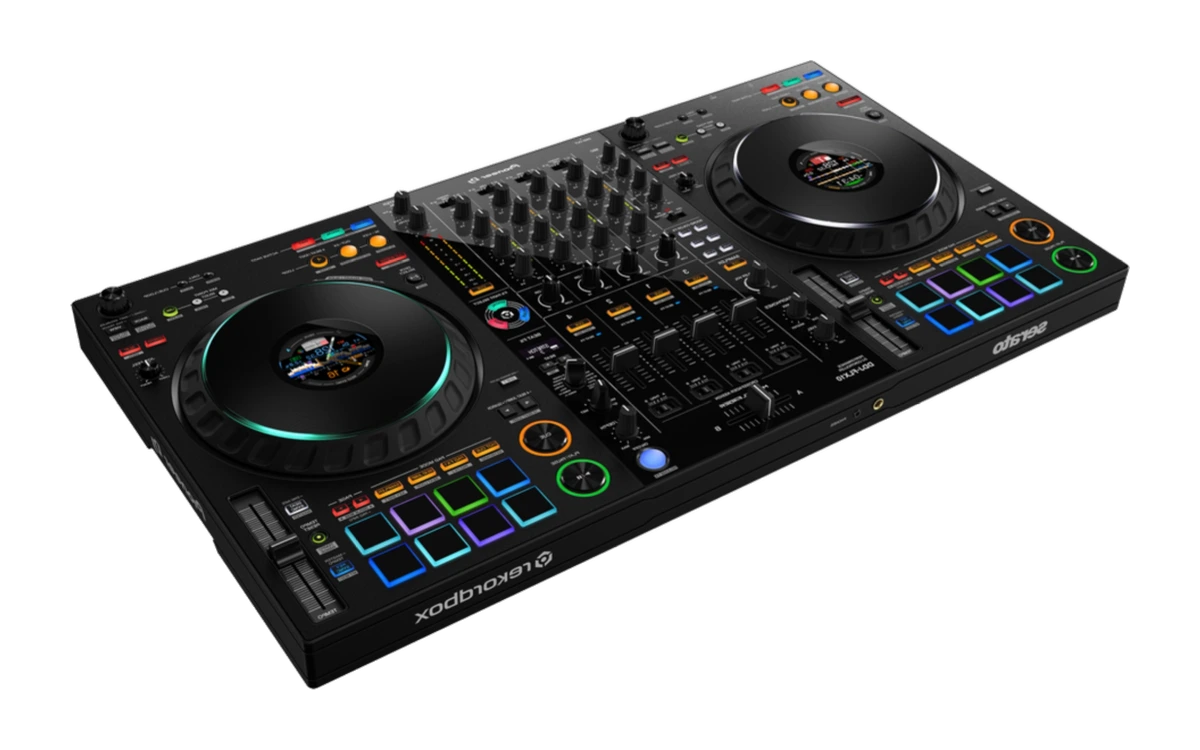
Pioneer DJ
DDJ-FLX10
Who it is for: Anyone who plays out a lot, needs four decks and wants a unit that mirrors the club setup.
- In its favour: Runs with rekordbox and Serato DJ Pro
- Against it: Big, heavy and expensive for a unit that still needs a laptop
Where it says “Ad” we earn a commission if you buy through the link — on the other routes we earn nothing. Either way you pay the same price, and it changes nothing about our recommendation. How we handle this
The 4 most expensive beginner mistakes when buying a controller
Step by step
Master AND headphones, separate. Without two outputs there is no cueing, and without cueing there is no mixing — only playback. This is the one feature with no compromise, and it is in every spec sheet.
Three per channel — high, mid, low. Some entry-level units only have two, and then the mid is missing, which a good part of every EQ guide builds on. Two bands are not a deal-breaker, but you need to know you will be learning something slightly different.
Which program does the unit unlock, and what does it cost after that? With some makers the software is free and the unit unlocks it; with others the unit decides whether you pay. That is running money against one-off money — the question belongs before the purchase, not after.
Measure the space it will live in before you choose the model. A unit that goes back in the cupboard after every session gets used less — and practice lives on short and regular, not long and rare. This is the point where size really decides.
On top of the unit come headphones and some form of speakers — without both a controller is silent. Budget only as far as the unit and you end up with a box and no way to start. Plan the three parts together and, if you must cut, cut on the unit rather than the headphones.
From here on any unit that meets the points above wins. The difference between two entry-level controllers is smaller than the difference between two weeks of practice and two weeks of further reading — and that is exactly what comparing costs.
Frequently asked questions about buying a DJ controller
Which DJ controller is best for beginners?
For most beginners, the Pioneer DDJ-FLX4 (approx. €300) is the best choice: a full audio interface, compatible with rekordbox and Serato, club-like layout. If you first want to test whether DJing is even for you, the Pioneer DDJ-200 (approx. €150) or the Hercules Inpulse 200 MK2 (approx. €100) is a cheaper way in.
How much do I need to spend on a good DJ controller?
€100–300 is completely enough to get started. Below €100 the hardware gets noticeably worse (wobbly jog wheels, no audio output); above €300 you're paying for features you won't use yet as a beginner (4 decks, standalone operation, motorised jog wheels).
Does it have to be a Pioneer controller?
No — Hercules and Numark make good entry-level units. But Pioneer has two real advantages: Pioneer gear (CDJs) is in almost every club, and rekordbox skills carry over directly to it. If you're heading towards club DJing, getting used to the Pioneer layout and rekordbox makes the later switch-over easier.
Can I buy a DJ controller second-hand?
Yes — entry-level controllers in particular are noticeably cheaper second-hand, because many buyers give up again quickly — roughly a third to half below the new price, as a rule of thumb rather than a measured figure. When buying, check: all faders and knobs are free of crackle, jog wheels respond cleanly, the USB port is solid, and whether the software licence is transferable (rekordbox: yes, tied to the hardware).
What's the difference between the DDJ-200 and the DDJ-FLX4?
The DDJ-200 (approx. €150) is a pure learning controller: no audio interface of its own, master output only via the laptop's headphone jack with a splitter cable. The DDJ-FLX4 (approx. €300) has a full audio interface (separate speaker and headphone outputs), supports rekordbox and Serato, and is therefore also suitable for first small gigs.
Do I need speakers on top of the controller?
For practising, headphones are enough (closed-back, from around €50). Active monitor speakers (from around €100–150 a pair) only become worthwhile once you practise regularly or play in front of friends. For getting started: controller plus headphones, nothing more.
What do I look at first when comparing?
Three things, in this order: does it have two separate outputs, master AND headphones? Without that there is no cueing, and without cueing there is no mixing. Does it have a three-band EQ per channel? Some entry-level units only have two, and the whole EQ part of the learning path assumes three. And does it unlock the software you want to use? Everything else — pad size, effects, displays — decides comfort, not learning.
Does the size of the unit matter?
Less for learning, a lot for handling. Small units have cramped jog wheels and short faders — both make fine movements harder, especially when beatmatching by hand. Larger units cost desk space and have to be carried. The useful question is not “big or small” but: does it stay set up? A unit that goes back in the cupboard after every session gets used less often.
A new entry-level controller or second-hand club gear?
The controller to begin with, and the reason is not price. Club gear is several devices that work separately and have to be wired together — every fault there costs evenings in which you are not DJing but searching. A controller is one cable and it runs. Second-hand players pay off once you already know what you are doing and are working deliberately towards club operation.
Controller's here — now what?
Learn to use it — free, in 12 phases.
Phase 1 starts with the controller setup, phase 5 with beatmatching. 115 skills, no subscription, no paywall.
Start for freePrices as of 08/2026. All amounts are approximate figures from German retail and change constantly — check the current price with the retailer of your choice before buying. We don’t link to shops and don’t earn anything on any purchase.
Terms on this page
Explained in one line — each term leads to the glossary.
Related reading
Sources
The key factual statements on this page are backed by the sources listed below. How we pick sources is explained under Sources & editorial policy.
Sources (4)Reviewed 08/2026
- DDJ-FLX2 — Einsteiger-Controller mit eingebautem Audio-InterfacePrimary sourceAlphaThetaManufacturerretrieved 12.08.2026
The DDJ-FLX2 replaces the DDJ-200 and, unlike it, brings a built-in audio interface. Taken 2026-08-12.
- DDJ-200 — BedienungsanleitungPrimary sourceAlphaTheta CorporationManufacturerretrieved 11.08.2026
German edition, 193 pages. In the buying guide under “Best choice to start with”.
- DDJ-FLX4 — BedienungsanleitungPrimary sourceAlphaTheta CorporationManufacturerretrieved 11.08.2026
German edition, 177 pages.
- Preisvergleich DJ-Controller (Deutschland)Specialist literatureGeizhalsTrade publicationretrieved 12.08.2026
German retail prices, taken 2026-08-12: DDJ-FLX4 from about 295 €, DDJ-REV1 from about 256 €, DDJ-FLX2 from about 156 €. Street prices, not manufacturer figures — which is why the text says “about” throughout.
Last reviewed: 12.08.2026.