What actually happens when you scratch
One hand moves the sound forward and back, the other decides when you hear it. That is all it is. Everything that sounds unreachably virtuosic — chirp, flare, crab — is a variation on that: the same movement, a different pattern on the fader.
That is where the order of this guide comes from. Bring the fader in too early and you practise two things halfway instead of one properly — and the result will not tell you which of the two hands is at fault.
What you need for it
One deck with a vinyl mode
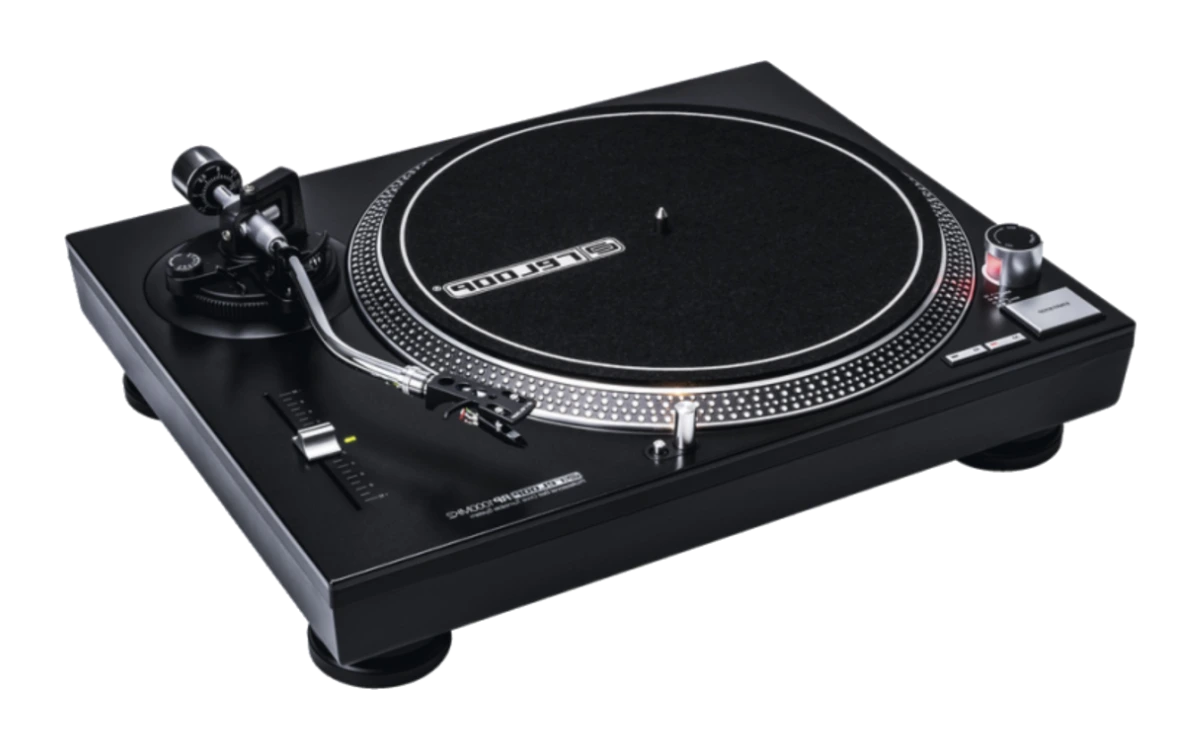
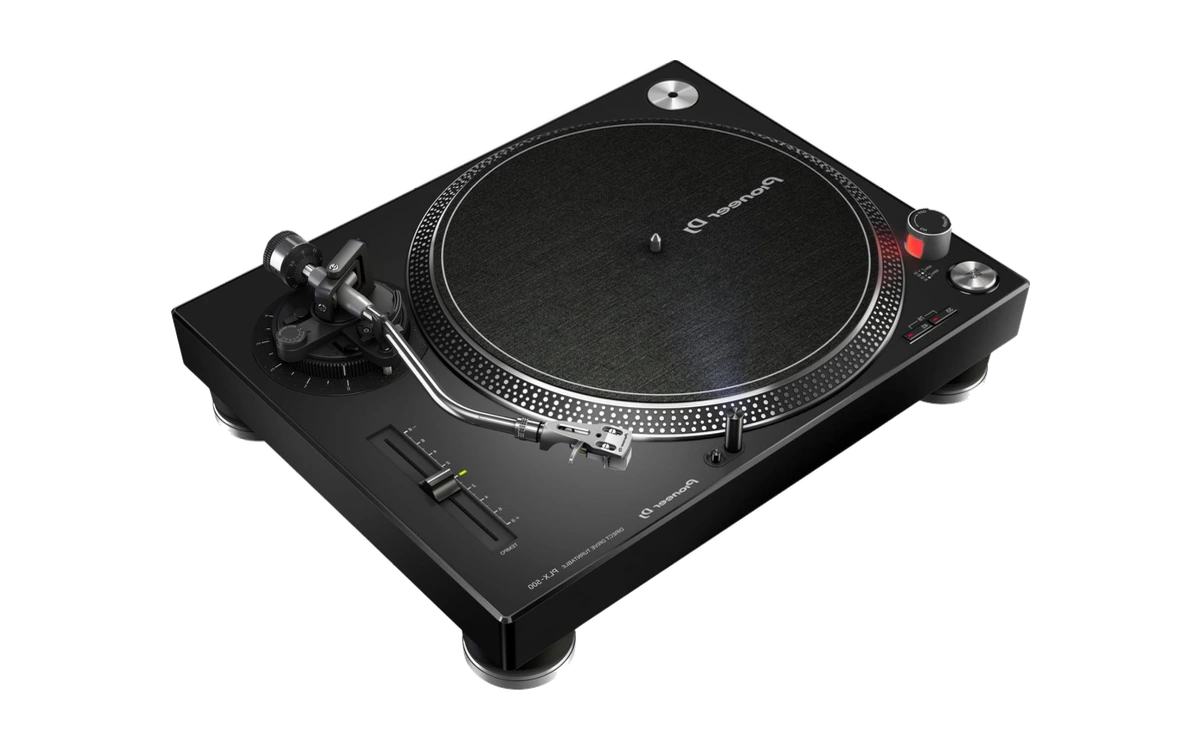
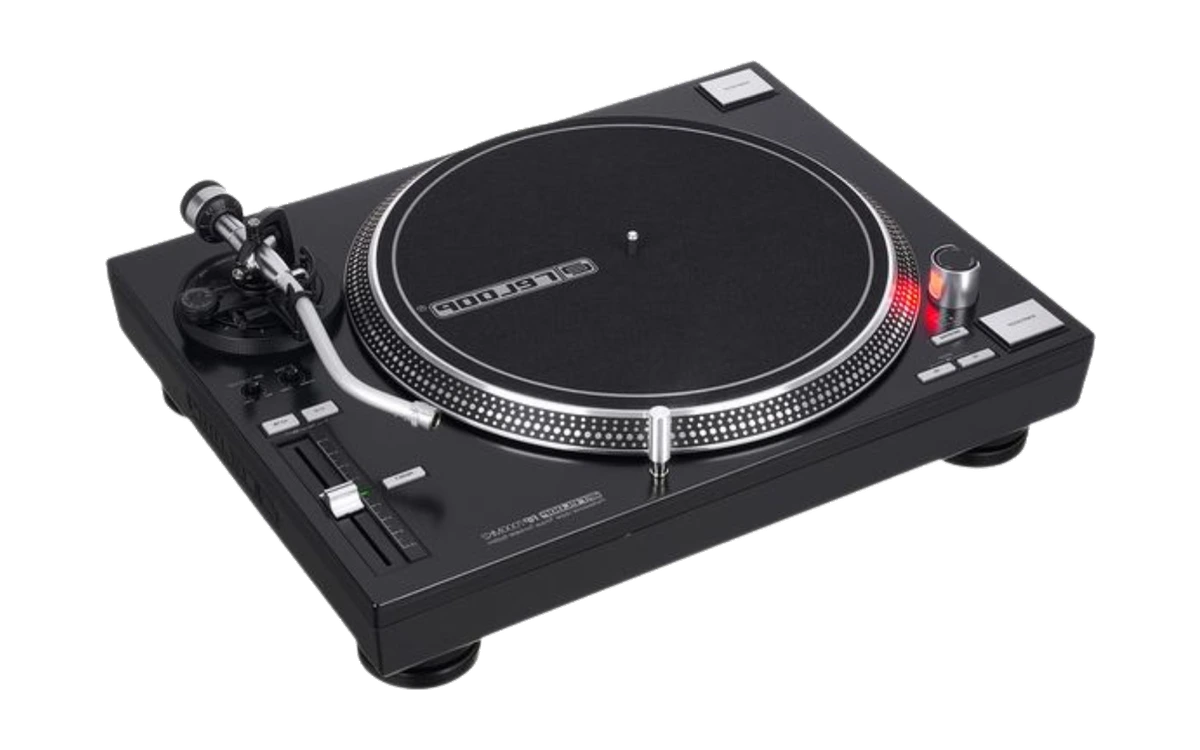
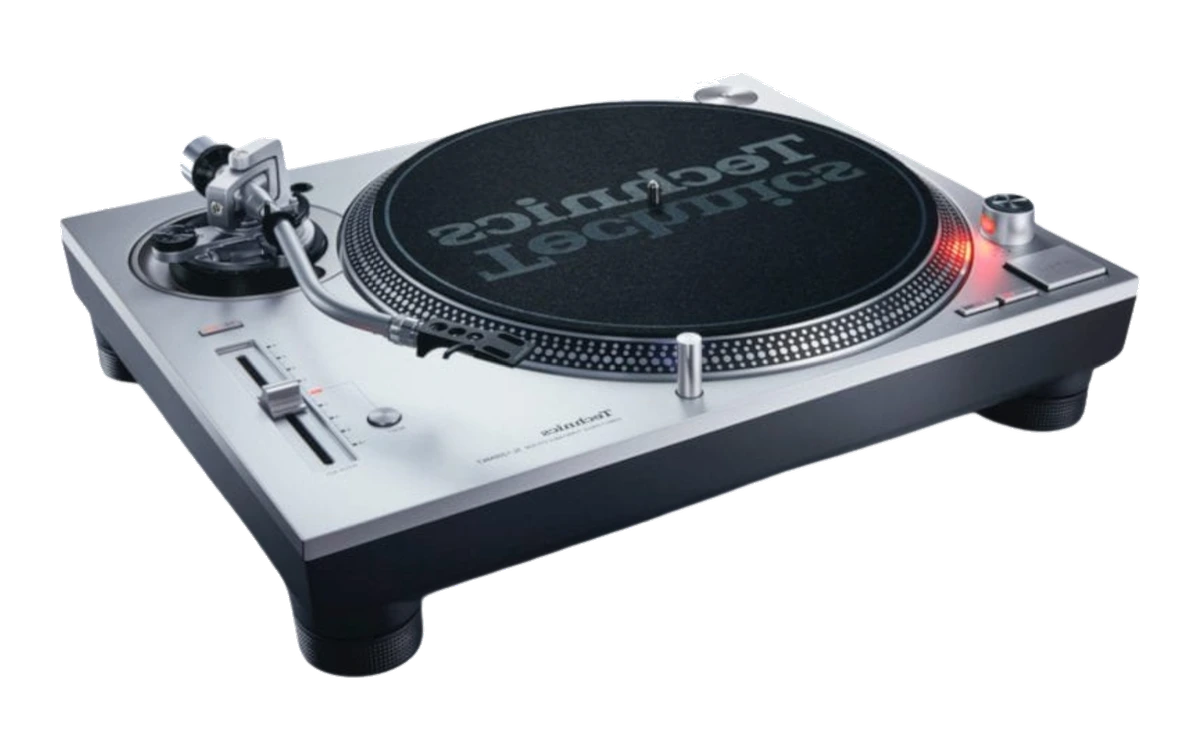
Turntable or jog wheel is secondary. What matters is that touching the surface drags the audio with it instead of just searching — on controllers that state is usually called vinyl mode.
A crossfader you can set hard
If your mixer has a curve control it belongs in the sharpest position. A soft curve blends and turns every cut to mush. Where the setting lives is in your own manual.
One single short sound
A hard attack you hear instantly — traditionally a spoken word off a battle record. Stay with that one for months. Change the sound and you relearn where its start sits every time.
A beat underneath
A plain loop at a medium tempo. Without one you practise a noise instead of a rhythm — and later you can hear exactly who practised to a beat and who did not.
Learn to scratch in 6 steps
Work through the steps in order and only move on once the previous one runs without thinking. That takes longer than it looks, and it is the only route that does not end in a dead end.
Set up a sound and a beat
Load a short, hard sound on deck 1 and a plain loop at a medium tempo on deck 2. Put a cue on the sound right at its attack — not before it. A cue two tenths early makes every scratch soft, and you will look for the fault in your hand instead of in the cue.
Baby scratch: out and back, fader open
Leave the crossfader open, lay your hand flat on the platter or jog wheel and move the sound evenly forward and back — one push per beat, one pull per beat. The movement comes from the forearm, not the fingers. The aim is not speed, it is both directions sounding equally long.
Practise the crossfader on its own
Put the scratching hand aside and drill only the fader: open, closed, open, closed, in time with the loop. It feels silly and it is the step almost everybody skips. Coordinating both hands is only possible once one of them has stopped thinking.
Forward scratch: silence the return
Now both together. Fader open as you push the sound forward; fader closed before you pull it back. At first it sounds choppy because you close too late — that is normal and it is the actual learning step. Give it weeks, not minutes.
Put it on the beat and count out loud
Up to here you have practised a movement. From now on you practise music: place every scratch on a fixed count and count out loud. A scratch that does not sit rhythmically is not a scratch, it is a noise — and that is the difference an audience hears immediately.
Record it and listen back
Record two minutes and listen to them the next day. While you play you hear your intention; in the recording you hear your result — and at the start those two are far apart. Note three places, not ten, and keep working on exactly those three.
The four patterns that take you a long way
These four are enough for years. Anyone who can do them cleanly in time sounds better than someone who half-knows ten — that is as true for scratching as it is for mixing.
Baby Scratch
Out and back with the crossfader open. Both directions sound. The foundation — and the only scratch you can practise without the second hand.
Forward Scratch
The fader closes on the way back: only the forward motion is audible. The first step where your hands do different things — and therefore the one most people get stuck on.
Chirp
The reverse: the fader is open as you start the push and closes during it. The result sounds short and chirped. It builds directly on the forward.
Stab / Cut
Not a separate hand movement but a matter of timing: place the sound exactly on a count and close it again immediately. The step from practising to making music — and the one that actually turns up in a set.
Your week: ten minutes a day
Ten minutes a day beats two hours on a Sunday, and by a clear margin. The movement is motor learning — it needs repetition across days, not stamina on one day.
| Day | Exercise | What to watch for |
|---|---|---|
| Mon | Baby scratch, fader open | Both directions equally long. Nothing else. |
| Tue | The crossfader alone | Scratching hand aside. Open, closed, open, closed — in time with the loop. |
| Wed | Baby scratch on the one | Count out loud. The scratch lands on the count, not next to it. |
| Thu | Forward scratch, slow | Half speed. Clean beats fast, every day this week. |
| Fri | Forward scratch at tempo | Only now faster — and only as fast as it stays clean. |
| Sat | Record two minutes | Do not listen yet. Tomorrow, with some distance. |
| Sun | Listen back, note three points | Exactly three. Those are next week's work. |
The most common mistakes
Trying to learn both at once
Hand and fader together from the start — and then the result no longer tells you which of the two hands is making the mistake. Practising them apart takes less time, even though it looks like more.
Practising without a beat
A scratch is rhythm. With no loop underneath you practise a movement that feels right and still does not sit in a set.
Working from the wrist
The movement comes from the forearm. From the wrist it turns short, uneven and, over time, painful.
Setting the cue point too early
If the cue sits two tenths before the attack, every scratch sounds soft — and you spend weeks looking for the fault in your hand instead of in the data.
Changing the sound all the time
Every new sound means relearning where its start is. Stick with one and you make twice the progress in the same time.
Common questions about scratching
Do I need turntables to learn scratching?
No. You learn the movement on any jog wheel with a vinyl mode — which is nearly every controller. What you are missing is the weight: a platter keeps spinning when you let go, a jog wheel does not always do so to the same degree. You only notice that with fast patterns. For the baby scratch, the forward and your first rhythms, a controller is entirely enough — and switching to turntables afterwards takes days, not months.
How long does it take to learn scratching?
A clean baby scratch in time takes one to two weeks at ten minutes a day. Getting the crossfader to come along reliably — forward and chirp at tempo — is more like two to three months. And then the part begins that is never finished: patterns of your own. Those timings are our teaching experience, not a measurement; daily practice is far faster than one hour once a week.
What is the difference between a baby scratch and a forward scratch?
In a baby scratch the crossfader stays open — you hear the movement out and back, both directions sound. In a forward scratch you close the fader on the way back: only the forward motion sounds, the return is silent. It is the first step where your two hands do different things, and for that reason the one most people get stuck on.
Which sound should I practise on?
A short, clear sound with a hard attack — traditionally the spoken „Ahh“ or a „Fresh“ off a battle record, in practice any sound whose start you hear instantly. Anything soft and anything long is unsuitable: a pad texture will not tell you whether you hit the start. It also matters to stay with ONE sound for a long time. Change it every other day and you relearn where the attack sits every time.
Do I even need scratching as a club DJ?
For playing out: no. You can play a whole night without a single scratch, and in many genres it would be out of place anyway. What scratching still gives you is control over the jog wheel — you learn to land a track exactly on the beat instead of hunting for it. You feel that in every transition, even if nobody ever hears a scratch from you.
Do I need to set anything up on the crossfader?
If your mixer has a crossfader curve control: set it to the sharpest position. A soft curve blends and turns every cut to mush; a hard curve switches within the first few millimetres, and that is what you need. Where that setting lives, and whether it exists at all, differs by device — look in your own manual rather than at a video about a different mixer.
Why does my scratch sound uneven?
Almost always for one of three reasons. First: the movement comes from the wrist instead of the forearm — then it is short and irregular. Second: you cannot hear yourself because the monitor is too quiet; without feedback you correct nothing. Third, and this is the most common: you are practising without a beat. A scratch is rhythm, not noise — put a simple loop underneath and count along.
Practise now
Foundations first, tricks after
Scratching stands on a sense of timing and jog wheel control. That is exactly what DJLearn trains across twelve phases — free, at your own pace.
Start for free