
What a controller already is
A controller is not a toy mixer but three devices in one: the control surface for the software, the mixer and the sound card. Which is exactly why it is the cheaper and the simpler answer for starting out — one cable to the computer, one pair to the speakers, done.
What you learn on it is not lost when you switch. Setting gain, EQ, channel fader, cueing — those are the same moves on every device in the world. Master a controller and a club booth is not a puzzle, it is a different arrangement of the same controls.
The four differences that matter in use
Everything else — sound, build, the feel of the faders — is taste and cannot sensibly be decided for you. These four can be named, and the purchase hangs on them.
| Area | On a controller | On a standalone mixer |
|---|---|---|
| Channels | Two, built in | A standalone mixer offers more — the DJM-900NXS2 is built as a 4-channel unit. You only need that once four sources are connected at once. |
| Isolator | Usually none | The DJM-A9's EQ runs from -26 dB to +6 dB, its isolator to minus infinity. A cut band is quiet; an isolated one is gone. |
| Send/return | Not provided | The DJM-900NXS2 carries an independent send/return for external effects units. If you own none, you are paying for a socket. |
| Booth output | Rare | On the DJM-A9 a dedicated booth level is documented — the monitor in the booth can be set independently of the room. Unnecessary at home; in a club it is why you hear anything. |
The figure that separates isolator from EQ
AlphaTheta specifies a switchable three-band equaliser of -26 dB to +6 dB for the DJM-A9. The isolator on the same unit runs from +6 dB to minus infinity — it removes the band instead of lowering it. That is the whole difference, and it is audible: a cut bass is quiet, an isolated one is gone.
You do not need that for a clean transition. The bass swap works with any ordinary EQ, and if that move is not solid yet, an isolator gains you nothing. It is a shaping device for people who already know what they want to say with it.
The decision, step by step
Six steps, and the last one is the real test: can you name the missing function?
First ask where you want to play
At home and at small parties a controller is enough. Anyone aiming for clubs will find a mixer there anyway and does not need to own one — they need to be able to operate it. Answering that single question settles half the purchase.
Count your sources, not your wishes
Write down what needs to be connected at the same time: two decks, laptop, microphone, maybe a turntable. That number decides the channel count — not the feeling that four sounds better than two.
Look up what the EQ actually does
The spec sheets state it precisely: on the DJM-A9 the three-band EQ runs from -26 dB to +6 dB, while the isolator goes to minus infinity. The difference is not equipment but purpose — tidying versus shaping.
Check the sockets you don't see
Send/return, booth output, record output: these are the connectors where a mixer differs from a controller. The DJM-900NXS2 carries an independent send/return — if you do not need it, you still pay for it.
Count the sound card in
A controller brings one; a mixer often does not — then you need an interface as well, plus cables. Comparing the mixer price with the controller price compares two different shopping lists.
Decide only once you can name a function
If you can say what is missing — four channels, an external effects unit, a turntable — then buy. If nothing comes to mind, the honest answer is: not yet. The money does more in music and practice time.
One pick per budget
Mixers: our pick per price class
If the answer is a mixer: the units from the two-channel class up to the club standard.
Chosen by the same rules as the setup finder: in each price class “Recommended” first, then “Step up”, then “Entry level”. Whether and where we earn from a purchase has no say in the ranking. And every card also says what speaks against the unit.
- €100 to €200Entry level
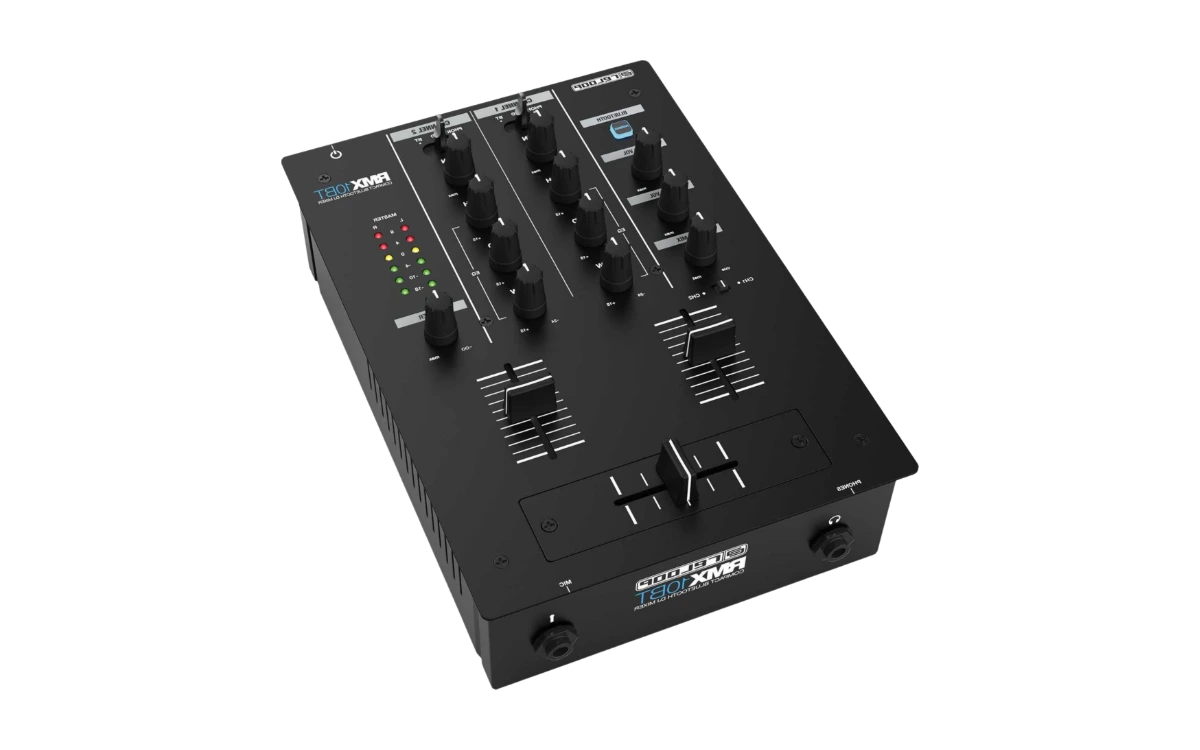
Reloop
RMX-10 BT
Who it is for: Anyone building a first vinyl setup who does not want to spend more on the mixer than on a deck.
- In its favour: Two channels are enough to learn on
- Against it: Layout differs from a club mixer
- €200 to €350Entry level
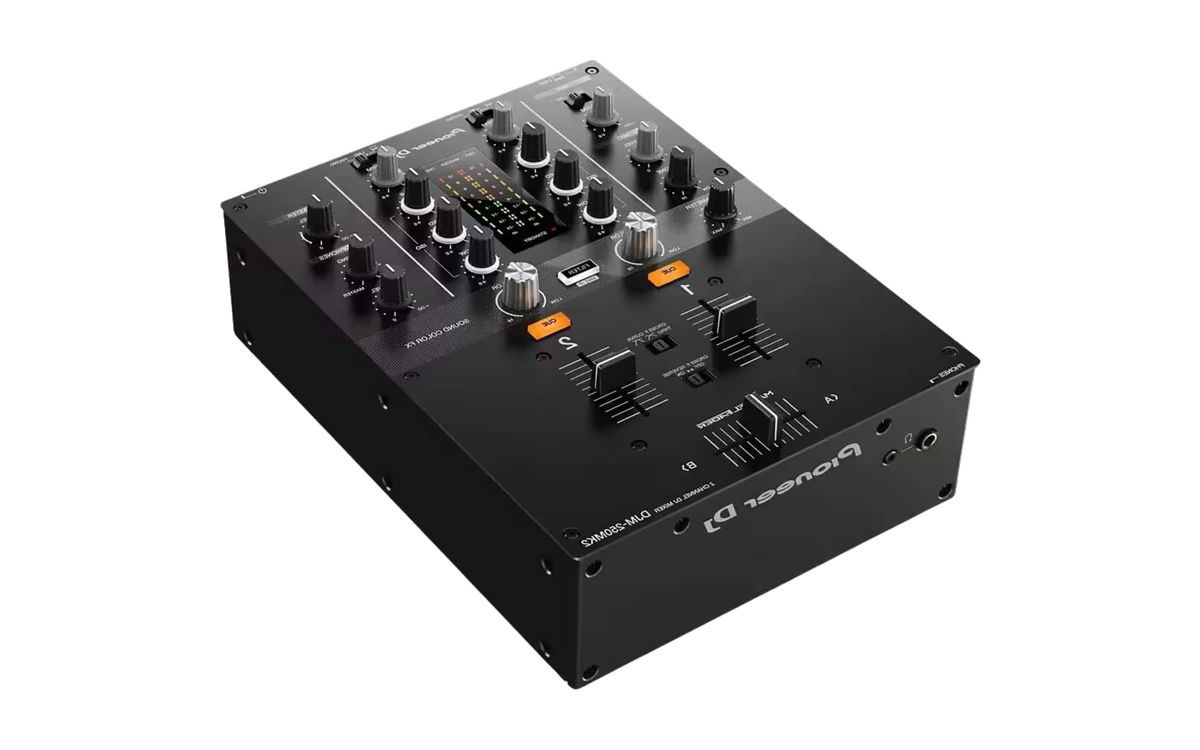
Pioneer DJ
DJM-250MK2
Who it is for: Anyone connecting two turntables who later wants to play digitally via DVS too.
- In its favour: Phono inputs for turntables
- Against it: Only two channels
- €350 to €600Step up
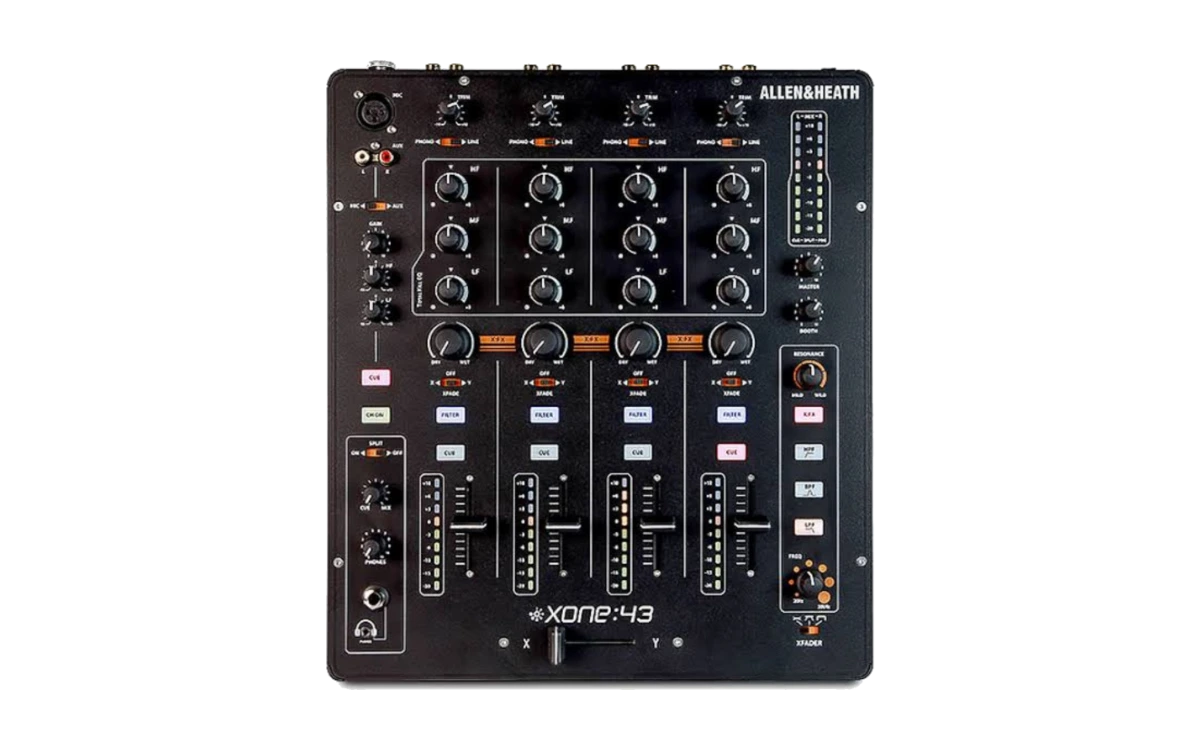
Allen & Heath
Xone:43
Who it is for: Anyone who wants the brand's sound and filter and does not need the sound card.
- In its favour: Four analogue channels
- Against it: No sound card — software needs an interface
- over €600Step up
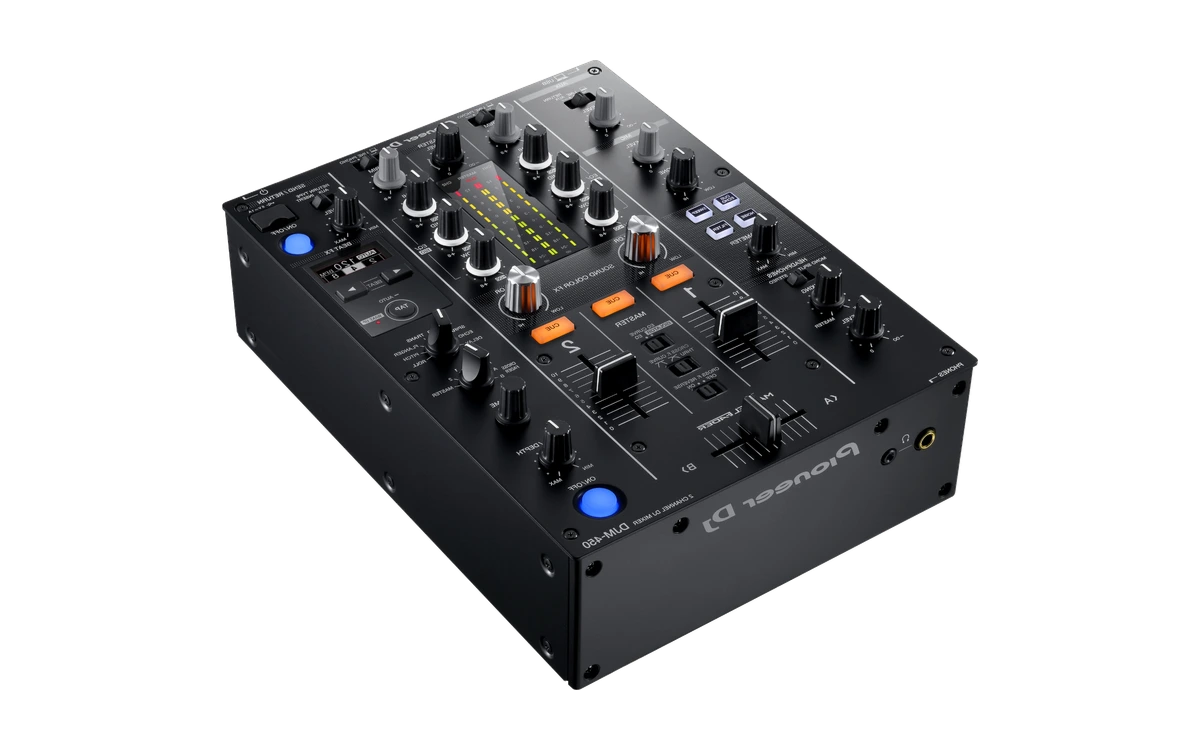
Pioneer DJ
DJM-450
Who it is for: Anyone who wants to run DVS with two turntables and have the club effects section at home.
- In its favour: Beat FX like on the big DJMs
- Against it: Only two channels
Where it says “Ad” we earn a commission if you buy through the link — on the other routes we earn nothing. Either way you pay the same price, and it changes nothing about our recommendation. How we handle this
Five expensive misunderstandings
Buying the club standard for your bedroom
What stands in a club you operate with the same moves you learned on a controller. An hour in front of the real thing beats twelve months of owning one.
Choosing channels by feel
Four channels are not better than two, they are more. Count what needs to be connected at once — that number is the answer, not the feeling.
Forgetting the sound card
A controller brings one, a mixer often does not. Comparing the two prices without counting interface and cables compares two different shopping lists.
Mistaking the isolator for a better EQ
It is not a tidying tool but a shaping device. If the bass swap is not solid yet, it gains you nothing — except another way to overdo it.
Buying in order to get better
No device ever taught anyone a transition. If you cannot name the missing function, the money does more in music and practice time.
When the switch is genuinely due
Four situations. In every other one the honest answer is: not yet.
You combine devices that know nothing about each other
Two players from one maker, a turntable, a laptop: as soon as several independent sources come together, the mixer is where they meet.
You want turntables permanently connected
A controller is not built for it. Anyone using vinyl or timecode seriously needs phono inputs — and the mixer has them.
You regularly play away from home
A mixer you know makes unfamiliar booths more predictable — provided you actually carry it. Otherwise it is an argument for a shelf.
You are missing a function you can name
Send/return for a specific unit, a fourth channel for a specific part, a booth output for a specific room. If you can finish that sentence, the decision is made.
A note: the figures on channels, EQ range, isolator, send/return and booth level come from the DJM-A9 and DJM-900NXS2 spec sheets. ⚠️ Not documented and therefore not claimed here: a dedicated booth level on the NXS2 and its numeric EQ range — for neither did the research find a citable source. This page quotes no prices; they change faster than a page gets maintained.
Frequently asked questions about mixers
Do I need a standalone mixer as a beginner?
No. A controller brings mixer, sound card and control in one box, and everything you learn in the first year or two you learn on it just as well. A standalone mixer only becomes interesting once you want to combine devices that know nothing about each other — players, turntables, a unit from a different manufacturer.
Two channels or four?
Four channels mean four sources at once — the DJM-900NXS2 is built exactly that way and is listed by the manufacturer as a 4-channel mixer. You need them when you work with two players plus a laptop plus a microphone, or layer several parts. For two decks and one mic, two channels are enough, and the extra two are just two more controls to grab by mistake in the dark.
What is an isolator, and how does it relate to the EQ?
Both are three-band controls, but they stop at different points. For the DJM-A9 the manufacturer gives the EQ a range of -26 dB to +6 dB, while the isolator goes from +6 dB down to minus infinity — the isolator removes a band completely. For a clean bass swap the EQ is enough; the isolator is a creative device, not a tidying tool.
What is send/return for?
It lets you hang an external effects unit into the signal path — the mixer sends the signal out and takes it back processed. The DJM-900NXS2 has an independent send/return for this. For most people it is the point where a standalone mixer starts doing something no controller replaces: built-in effects you have everywhere, an external box only here.
What is the booth output and why is it everywhere?
It feeds the monitor in the DJ booth, separately from the sound going to the room — on the DJM-A9 a dedicated booth level is documented. The point: you can listen louder or quieter than the audience without changing the room. At home it is usually unnecessary; in a club it is the reason you hear anything at all.
When is the switch actually worth it?
At three points, and none of them is „I'm better now“: when you regularly play with separate devices that share no housing; when you want turntables or players permanently connected; or when a function you can name is missing. If you cannot name the function, you do not need it.
Do I need the club standard at home?
No, and for most people it would be money thrown away. What stands in a club you operate with the same moves you learned on a controller — gain, EQ, channel fader, cue. An hour standing in front of the real thing is worth more than twelve months of looking at it at home.
What about a battle mixer?
A two-channel unit with an especially light crossfader, built for scratching. If you scratch, you feel the difference immediately; if you don't, you have bought an expensive two-channel mixer. So the question is not „is it better“ but „do I cut on it“.
Start learning
The gear is not what decides
DJLearn teaches the moves that are the same on every device — twelve phases, free, with no shopping advice as a business model.
Start for free